
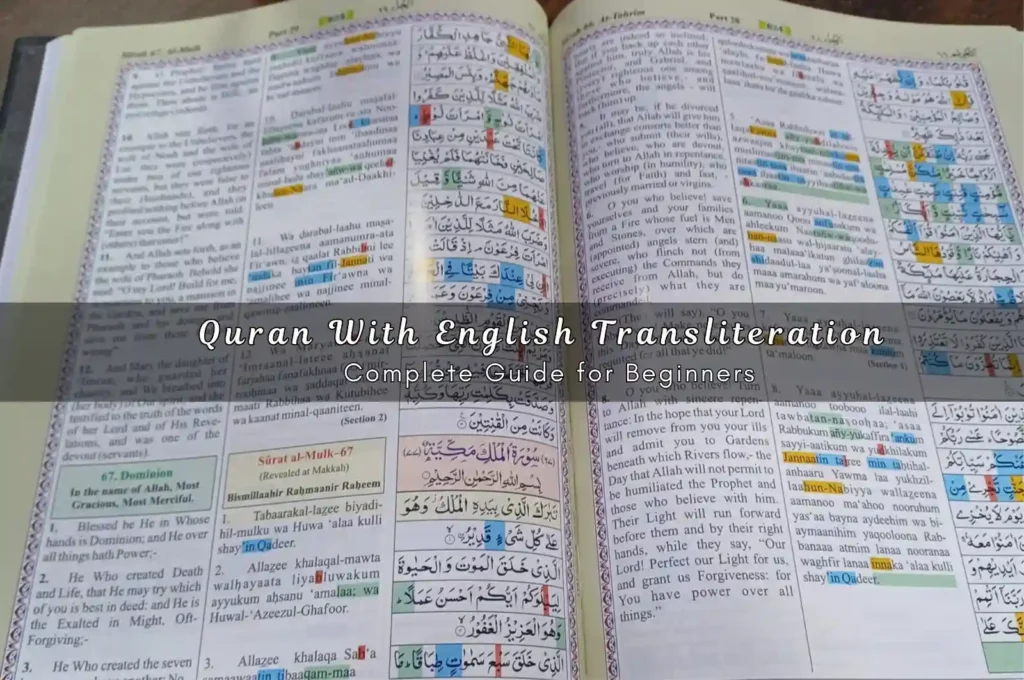
Many people want to read the Qur’an but struggle with Arabic letters. If that feels familiar, a Quran with English transliteration can make the journey much easier. It lets you read the Arabic pronunciation using English letters, even if you’re a complete beginner.
In this guide, you’ll learn what transliteration is, who it’s best for, and how to choose the right edition for your needs. We’ll also cover the best Qur’an publishers, where to buy authentic copies online, and simple steps to start reading confidently. Whether you’re a new Muslim, a non-Arabic speaker, or helping your kids learn, this article gives you clear, practical guidance.
By the end, you’ll know how to use transliteration effectively—and how to gradually move toward reading the Qur’an in Arabic at your own pace.
What Is a Quran With English Transliteration?
A Quran with English transliteration shows the Arabic words written in English letters, so you can pronounce them even if you can’t read Arabic script. Transliteration is not translation. Translation tells you the meaning, while transliteration tells you how the Arabic sounds.
Many learners use transliteration because it removes the fear of “misreading” Arabic. It acts as a bridge—helping beginners recite verses correctly while they slowly learn the Arabic alphabet. This makes it especially useful for new Muslims, kids, or anyone who wants to start reciting right away.
Using transliteration supports non-Arabic readers by:
- Making pronunciation clearer
- Helping you follow along with audio reciters
- Reducing frustration during early learning
- Building confidence for memorizing short surahs
Benefits of Reading the Quran With English Transliteration
Reading the Qur’an with English transliteration makes the learning journey much easier for beginners, especially those who can’t read Arabic yet. Because the Arabic sounds are written in English letters, you can start reciting correctly from day one without feeling overwhelmed.
Transliteration also improves Arabic pronunciation. Many letters—like “ḍaad,” “qaaf,” or “ayn”—don’t exist in English, but transliteration gives helpful markers so learners can practice tajweed more confidently. This becomes a strong foundation for memorizing short surahs and understanding proper recitation rules.
Here’s how transliteration helps:
- Makes difficult Arabic sounds easier to follow
- Builds confidence for new Muslims and children
- Supports tajweed and step-by-step memorization
- Helps with daily salah recitation, especially for Surah Al-Fatihah and Juz Amma
Quran Transliteration vs Translation vs Arabic Text
Transliteration, translation, and Arabic each serve a different purpose when learning the Qur’an. Transliteration shows how a word sounds by writing Arabic pronunciation in English letters. It helps beginners recite correctly even before they can read Arabic script.
Translation, on the other hand, explains the meaning. It tells you what Allah is saying, but it cannot fully capture the depth and style of the original Arabic. That’s why translations vary from one publisher to another.
The Arabic text is the original revealed Qur’an—unchanged and perfect. Every letter carries meaning, and proper recitation and tajweed are based on the Arabic script, not English letters.
The best approach is to use all three together:
- Arabic for authenticity
- Transliteration for pronunciation
- Translation for understanding
Types of Qur’ans Available With Transliteration
There are several types of Qur’ans designed to help learners read and recite more easily. One popular option is the full Arabic Qur’an with English transliteration, where each Arabic verse is followed by its Romanized pronunciation. This format is helpful for beginners who want to focus mainly on recitation.
Another option is the Qur’an with translation and transliteration combined. Here, you get the meaning and pronunciation together. Many readers prefer this because it supports both understanding and recitation in one place.
You can also find color-coded tajweed transliteration Qur’ans, which highlight rules like elongation and pauses. These editions guide learners visually, making tajweed practice simpler.
Digital choices are growing too, including PDF Qur’ans, mobile apps, and online platforms. These often include audio recitation, word-by-word pronunciation, and bookmarks.
Best English Transliteration Qur’an Editions (India, UK, USA)
Several reliable publishers offer high-quality Qur’ans with English transliteration, especially in India, the UK, and the USA. Popular names include Darussalam, Islamic Foundation UK, Noor International, and Maktaba Tul Madinah. These publishers are known for clear printing, accurate transliteration, and durable binding.
For beginners, it’s best to choose editions that include:
- Larger font
- Line-by-line Arabic + transliteration
- Clear spacing
- Optional English translation
These features make reading smoother and reduce mistakes in pronunciation.
For intermediate learners, color-coded tajweed editions or compact travel Qur’ans are helpful. They allow readers to improve fluency while still having support from transliteration when needed.
When comparing editions, check:
- Font size (easy to read)
- Page layout (line-by-line is ideal)
- Paper quality (non-glare is best)
- Color-coding for tajweed rules
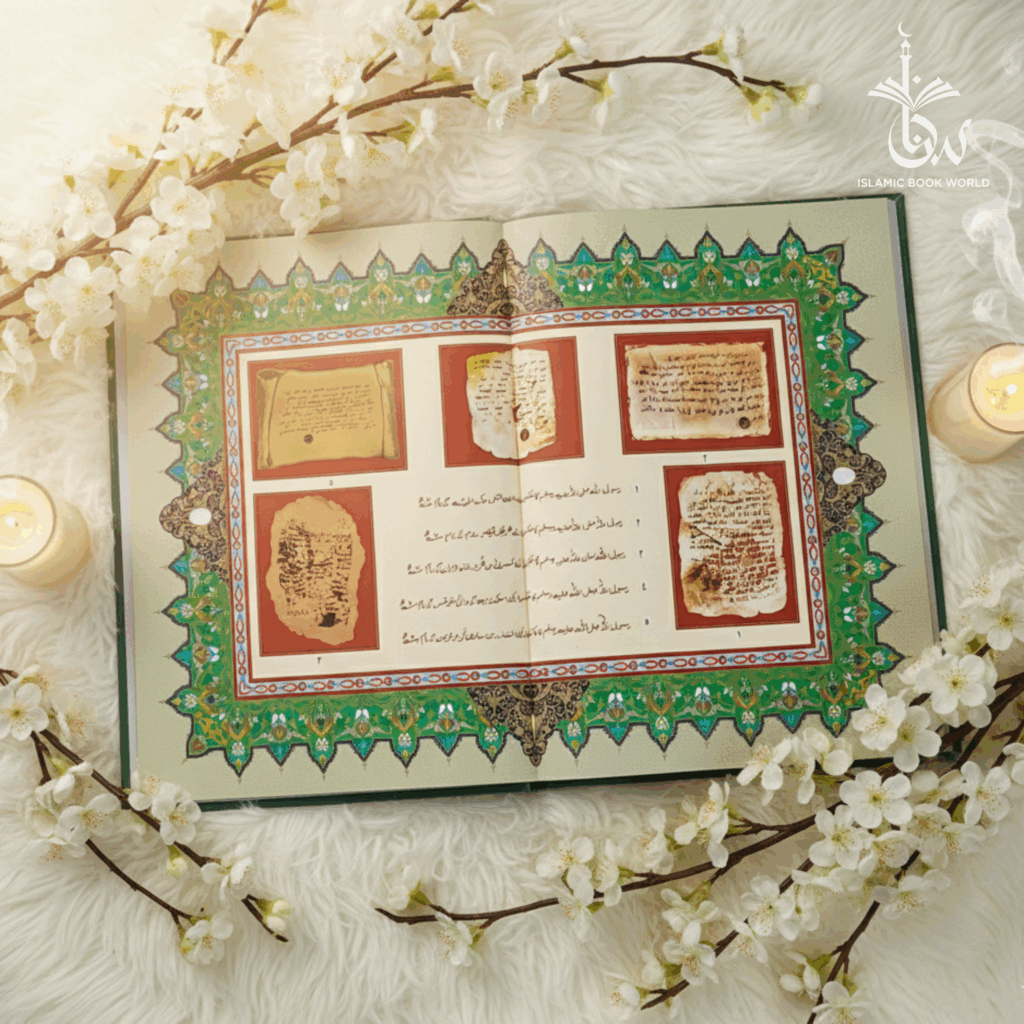
Where to Buy Quran With English Transliteration Online
Finding a Quran with English transliteration is easier than ever thanks to trusted Islamic bookstores and online platforms. In India, popular stores like Islamic Book Service and Idara publish reliable editions. In the UK and USA, Darussalam stores, Sunnah Books, and Islamic Shop UK offer a wide range of transliterated Qur’ans.
You can also buy through Amazon, Flipkart, eBay, and other major marketplaces. These platforms provide user reviews, fast delivery, and multiple editions to compare in one place.
Many readers prefer shopping directly from publisher websites such as Darussalam, Noor International, or Maktaba Tul Madinah. Buying from the source helps ensure authenticity and good print quality.
Tips for choosing a reliable seller:
- Check customer reviews and ratings
- Look for “verified seller” badges
- Compare edition details (font, layout, translation)
- Avoid listings without inside-page previews
How to Read the Quran in English Transliteration (Step-by-Step)
The best way to begin reading the Quran with English transliteration is to start small. Begin with short surahs from Juz Amma, such as Surah Al-Fatiha, Al-Ikhlas, and An-Nas. These chapters are easier to pronounce and often used in daily salah.
Next, learn a few basic Arabic pronunciation rules—like how to say “aa,” “kh,” and “gh.” This helps you read transliteration more accurately and avoid forming wrong habits.
Follow along with a trusted audio recitation while reading. Listening and repeating helps your tongue adapt to the Arabic sounds, even if you don’t know the script yet.
To build consistency, make a simple 10–15 minute daily routine:
- Read one short ayah
- Listen to the audio
- Repeat it slowly
- Review yesterday’s lines
Avoid common beginner mistakes like relying only on English letters, rushing through verses, or skipping audio practice.
Check this if you want to read Quran with Urdu transliteration.
Who Should Use Quran Transliteration in English?
A Quran with English transliteration is especially helpful for new Muslims and anyone who cannot read Arabic script yet. It lets them recite correctly while slowly learning how the words sound. This removes fear and builds confidence in the early stages of Qur’an learning.
It’s also great for kids who are just starting. The English letters help them pronounce Arabic words even before they fully recognize the Arabic alphabet. Parents and teachers often use transliteration as a support tool alongside regular Qaida lessons.
Busy adults and frequent travelers benefit as well. If someone struggles to maintain regular classes or doesn’t have access to a teacher, transliteration makes it easier to keep practicing during short breaks or while on the go.
People who find the Arabic script difficult—especially those with reading challenges—also use transliteration as a stepping stone.
Good to know: Many learners use transliteration for 2–3 months before smoothly transitioning to Arabic reading.
Common Issues With Transliteration (and How to Fix Them)
One common issue with Quran transliteration in English is pronunciation mistakes. English letters can’t represent every Arabic sound perfectly, so beginners may say words slightly wrong. The best fix is to pair transliteration with audio recitation. Listening daily helps you match the sound with the written form.
Another problem is the variety of spelling systems. For example, the same word may appear as Aa, A’, or Ā. This can confuse new learners. Choosing one style and sticking to it—preferably from a trusted publisher—keeps things simple.
Some learners also become too dependent on English letters. While transliteration is a helpful tool, it should not replace Arabic reading. Try a balanced approach:
- Read Arabic for a few minutes
- Then use transliteration to confirm pronunciation
- Repeat this daily
To transition smoothly to Arabic, start with short surahs and focus on recognizing common letters. Most learners can shift to reading Arabic comfortably within a few months when guided consistently.
FAQs on Quran With English Transliteration
1. Is the Quran with English transliteration accurate?
Yes, most published Qurans with English transliteration follow standard pronunciation rules. However, transliteration cannot capture every Arabic sound perfectly. It is accurate enough for beginners to start reading, but pairing it with audio recitation or a teacher gives the best results.
2. Is it allowed to read the Qur’an using transliteration?
Yes. Reading transliteration is allowed for learning and practice, especially for non-Arabic speakers. But for actual Qur’an recitation, Arabic text remains essential. Transliteration is simply a learning aid, not a replacement for reading the Qur’an in its original form.
3. Which is better: Quran transliteration or translation?
Both serve different purposes. Transliteration helps you pronounce Arabic correctly, while translation helps you understand the meaning. The best approach is to use both together: read the Arabic, check the transliteration for pronunciation, and read the translation for clarity.
4. What is the best English transliteration Qur’an for beginners?
Beginners usually prefer editions with large fonts, clear spacing, and simple transliteration systems. Popular choices include Darussalam, Islamic Foundation UK, and color-coded tajweed editions. These versions make pronunciation and tracking easier for new learners.
5. Can I read salah using transliteration?
You can learn salah recitation using transliteration, but prayer must eventually be recited in Arabic. Transliteration is a helpful temporary tool for beginners or new Muslims while they gradually memorize the Arabic text correctly.
6. Where can I buy a Quran in Arabic and English transliteration online?
You can find them on Amazon, Darussalam’s official website, Islamic bookstores, and regional online shops in India, the UK, and the USA. When buying, check for reviews, sample pages, and whether the transliteration system matches your learning level.
7. Is transliteration helpful for learning tajweed?
Yes, it helps beginners start pronouncing words closer to correct Arabic. However, tajweed rules involve details that transliteration cannot fully show. The best method is transliteration + audio recitation + practice with a qualified teacher whenever possible.
8. Can children learn the Qur’an faster with transliteration?
Many children find transliteration easier at the early stages because it uses familiar English letters. It builds confidence and helps them start reciting quickly. Still, it should be used alongside Arabic learning so they gradually transition to reading the actual script.
Pingback: Al Quran with Tajweed: Urdu & English Transliteration