
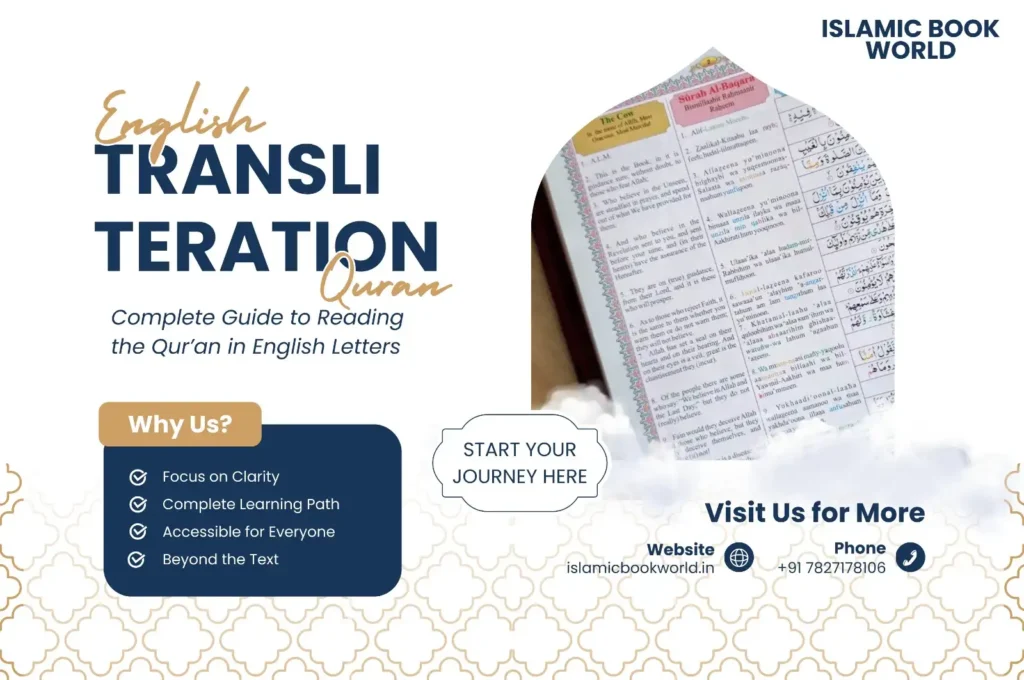
Many people want to read the Qur’an but struggle with Arabic pronunciation. If that feels familiar, English transliteration Qur’an editions can make the journey much easier. They show the Arabic text and match each word with an English phonetic reading, so you can recite correctly even as a beginner.
In this guide, you’ll learn what transliteration is, how it differs from translation, and why it’s helpful for new learners, reverts, students, and anyone working on proper recitation. We’ll also explore different types of Qur’ans available, the best editions to buy, and simple steps to start reading confidently. By the end, you’ll know exactly how to choose a Qur’an with transliteration and translation that fits your needs.
What Is English Transliteration of the Qur’an?
English transliteration of the Qur’an means writing Arabic words using English letters so readers can pronounce them correctly. It doesn’t give the meaning—only the sound. That’s why transliteration is different from translation. Translation explains the message, while transliteration guides how to read the Arabic text.
For non-Arabic speakers, transliteration works like a bridge. It helps beginners recite the Qur’an even if they don’t know Arabic letters yet. You simply follow the phonetic spelling, such as “Alhamdu lillahi rabbil ‘alamin.”
Many new learners and reverts prefer English transliteration because:
- It removes fear of mispronouncing verses
- It supports early memorization
- It helps build confidence before learning Arabic
- It pairs well with editions that include both translation and Arabic text
Benefits of Reading Qur’an Transliteration in English with Arabic
Reading Qur’an transliteration in English with Arabic helps learners pronounce verses correctly, even if they can’t read Arabic script yet. The English letters guide your tongue and sound, making recitation smoother and more accurate.
Transliteration also builds confidence. Beginners often hesitate because they fear making mistakes. With phonetic spelling beside the Arabic text, you can read aloud without guessing or feeling unsure.
It also supports memorization and light tajweed practice. When you see Arabic, the meaning, and the sound together, your brain connects them faster. This makes learning Surahs for daily salah easier and more natural.
Key benefits:
- Better pronunciation
- Stronger confidence
- Easier memorization
- Clearer salah recitation
English Transliteration vs Translation vs Arabic Text
English transliteration shows how a Qur’anic word sounds using English letters. It helps you pronounce verses correctly, even if you can’t read Arabic script yet. For many beginners, this is the easiest way to start reading aloud with confidence.
Translation, on the other hand, explains what the word or verse means. It helps you understand the message of the Qur’an, but it cannot fully capture the depth and beauty of the original Arabic wording.
The Arabic text is the exact revealed Qur’an, unchanged and preserved. It carries the full meaning, rhythm, and miracle of the scripture. Every letter matters, which is why Muslims aim to read the Qur’an in Arabic eventually.
Using all three together is the most effective approach:
- Arabic → original message
- Transliteration → correct pronunciation
- Translation → clear understanding
- Quran word to word translation
Types of Qur’ans Available: Arabic + English Translation + English Transliteration
There are several formats of English transliteration Qur’an editions, each designed for different types of learners. The most common is the full Arabic Qur’an with English transliteration, where the Arabic text appears on one side and the phonetic reading is placed right below each line. This format is great for beginners who want to focus mainly on recitation.
Another option is the Qur’an with translation and transliteration combined. Here, you get the Arabic verse, English transliteration, and English translation all together. This helps you read, pronounce, and understand the meaning in one place.
Some editions come with color-coded tajweed transliteration. The colors show where to stretch, stop, or apply special recitation rules, making it easier to learn proper tajweed.
Digital Qur’ans and apps also provide transliteration options, offering audio, bookmarks, and slow recitation modes.
Best English Transliteration Quran Editions (India, UK, USA, Global)
If you want to buy a Qur’an that includes Arabic text, English transliteration, and (often) translation — some editions stand out. Here are a few worth checking out for different needs and levels.
Popular publishers and recommended editions
- The Noble Quran Transliteration in Roman Script — Published by Darussalam, this edition offers classic Arabic text along with Roman-script transliteration and English translation. It’s widely used by beginners worldwide.
- Holy Qur’an with Arabic Text, Roman Transliteration and English Translation — Offered by publishers such as Kitab Bhavan / Idara Impex, this book provides a helpful 3-column layout (Arabic + transliteration + translation). Good for learners and global readers.
- Other widely-used 3-column transliteration editions — There are versions combining Arabic script, transliteration, and respected English translations (e.g. by translators like Marmaduke Pickthall), useful especially for those who want clarity in meaning and correct recitation.
Features to compare (font size, layout, color code, paper quality)
When you buy, check these:
- Clear Arabic script (often Uthmani style) that’s easy to read.
- Roman-script transliteration printed legibly — not too small or cramped.
- If included, English translation that’s easy to understand.
- Good paper quality and strong binding — important if you read daily.
- For better recitation: clear spacing, column layout (Arabic | transliteration | translation).
For beginners vs intermediate learners
- Beginners / non-Arabic readers: Mixing Arabic text + transliteration + translation helps build correct pronunciation and basic understanding from the start. Editions like “The Noble Quran Transliteration in Roman Script” are ideal.
- Intermediate learners (some Arabic know-how): A clean layout with transliteration as a helper — so you focus more on Arabic text while using transliteration for tricky words. 3-column editions work well here.
Where to Buy Qur’an with Transliteration and Translation Online
Finding a Qur’an with transliteration and translation is easy online, and many trusted stores deliver worldwide. In India, Islamic bookstores like Darussalam India, Iqra Book Centre, and Idara Impex offer multiple editions. In the UK and USA, shops such as Islamic Shop UK, Dar-us-Salam, and Al-Rashad Books carry reliable 3-column and transliteration formats.
When choosing a seller, check:
- Verified ratings and reviews
- Clear product photos
- Return/replacement policy
- Authentic publisher details
If possible, choose sellers who clearly show sample pages so you can check the font size, layout, and transliteration style before buying.
How to Read the Qur’an in English Transliteration (Step-by-Step)
Reading the Qur’an through English transliteration is simple when you follow a clear routine. Start with short surahs from Juz Amma, such as Surah Ikhlas, Falaq, and Naas. These have easy vocabulary and help you get used to how Arabic sounds when written in English letters.
Learn basic pronunciation rules like stretching sounds (madd), stopping signs, and how letters like “kh,” “gh,” and “q” are pronounced. This prevents early mistakes. Then, follow along with an audio reciter so you can match what you read with the correct sound.
A simple daily plan works best:
- 5 minutes: Read one short verse
- 5 minutes: Listen and repeat with audio
- 5 minutes: Review any difficult words
Avoid common mistakes like relying only on transliteration, reading too fast, or skipping pronunciation rules.
Who Should Use Quran Transliteration in English?
Quran transliteration in English is especially helpful for new Muslims and anyone who doesn’t speak Arabic. It allows them to read the words of the Qur’an using familiar English letters, making the learning process smoother and less stressful.
It is also great for kids who are just starting their Qur’an journey. Transliteration helps them pronounce words correctly before they fully learn Arabic letters. Many parents and teachers use it as a support tool during early learning.
Travelers and busy adults benefit too. If you’re often short on time or away from your regular mushaf, transliteration helps you continue reading and practicing wherever you are. It’s simple and quick to follow.
This method also supports people who struggle with Arabic script due to age, eyesight issues, or learning challenges.
Common Issues With English Transliteration (and Solutions)
Many learners using English transliteration face pronunciation errors. This happens because some Arabic sounds don’t exist in English. Letters like ع, غ, and ق can be hard to express using English spelling. The solution is to pair transliteration with audio recitation so you hear the correct sound while reading.
Another issue is the difference in spelling across books. For example, “salaah,” “salat,” or “salah” may all refer to the same word. This can confuse beginners. To avoid this, stick to one publisher or one app so you get used to a consistent pattern.
Some readers also become over-dependent on English letters and avoid transitioning to Arabic. A helpful solution is to gradually shift by reading both side-by-side—Arabic on one line and transliteration under it.
FAQs on English Transliteration of the Qur’an
1. Is the English transliteration of the Qur’an accurate?
Yes, English transliteration is generally accurate for pronunciation, but it does not carry the full meaning of the words. It only shows how to pronounce Arabic using English letters. For proper understanding, it’s best to use transliteration along with translation or tafsir.
2. Can I learn to read the Qur’an using transliteration only?
You can start with transliteration, but it should not be your final method. Transliteration helps with pronunciation in the early stages, but Arabic letters are essential for true reading, tajweed, and memorization. Most learners transition to Arabic within a few months of practice.
3. Which is better: English transliteration or English translation?
They serve different purposes. Transliteration helps you pronounce Arabic correctly, while translation tells you the meaning. For effective learning, both should be used together—read the Arabic, follow the transliteration for pronunciation, and check the translation for meaning.
4. Is it allowed to read Qur’an in transliteration for beginners?
Yes, beginners may use transliteration for learning pronunciation. However, transliteration is not a replacement for reading actual Arabic script. As you improve, you should gradually shift to reading from the Arabic text because the Qur’an was revealed in Arabic.
5. Where can I find Qur’an Arabic, English translation, and transliteration in one book?
Many publishers offer all three together. You can find such editions in Islamic bookstores, Amazon, Darussalam stores, Iqra publishers, and various online Islamic shops. Look for editions labeled “Arabic + English Translation + Transliteration.”
6. Is English transliteration enough for daily salah?
Transliteration can help you learn how to pronounce verses correctly, but the actual recitation in salah must be in Arabic. Use transliteration only as a learning tool until you can recite the Arabic confidently.
7. Which is the best Qur’an with transliteration for beginners?
Beginners often prefer editions with large fonts, clear spacing, and color-coded tajweed. Popular options include the “Noble Qur’an Transliteration,” Darussalam transliteration editions, and student-friendly versions with Arabic, translation, and transliteration on the same page.
8. Can children learn Qur’an faster using transliteration?
Yes, many children find transliteration helpful in the early stages because it shows them how to pronounce words easily. However, they should still learn Arabic letters gradually so they can read the Qur’an properly as they grow.